
Industry 4.0: Can you afford to ignore it?
We are witnessing a fundamental transformation in how corporations produce goods thanks to a revolution in digitalization. Industry 4.0 describes the 4th industrial revolution whereby existing

We are witnessing a fundamental transformation in how corporations produce goods thanks to a revolution in digitalization. Industry 4.0 describes the 4th industrial revolution whereby existing
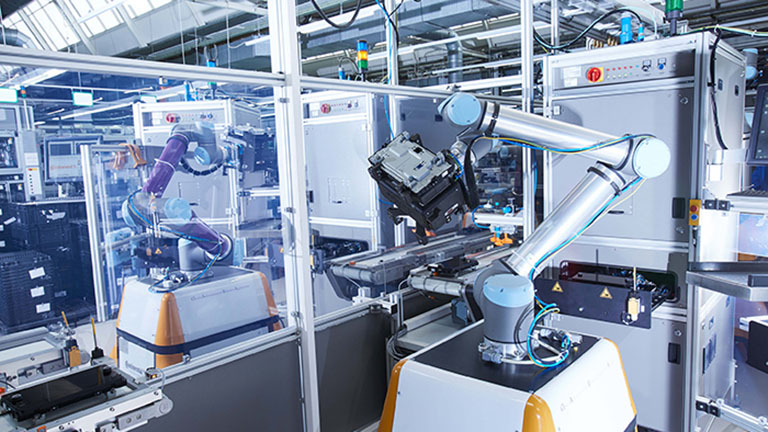
Industry 5.0 can already be seen on the horizon, which according to some tech visionaries, will bring an increased human touch back to manufacturing.

Mobile in manufacturing is a driving force of Industry 4.0 - now is the time to adopt this technology within your business operations.

Businesses need to be using their most important asset, human strategy, when discussing smart manufacturing.

The idea of “smarter manufacturing’ – connecting materials, processes, and systems holistically is the special sauce that defines the future of national economic security and resiliency. When

Learn major elements of why manufacturers are using Additive Manufacturing - from speed of production, to customization, to product performance, to simplifying complicated manufacturing

Creating a successful smart manufacturing environment may seem like insurmountable obstacle to small and medium-sized manufacturers. However, with experienced guidance, small and medium-sized

From starting small, to thinking scalability and finding real issues to tackle on your shop floor, hear expert advice from Isaac Bennett, Director of IT and Digital Transformation from Detroit

Q&A with Mike Mikula, Chief Engineer, Advanced Manufacturing from the Ford Motor Company, who joined The Best of SMX to discuss "Ford's Journey to a Smart Manufacturing

In his closing keynote presentation, “Making Smart Manufacturing Relevant with Enterprise Sized Value,” Sudhi Bangalore, Chief Technology Officer for Global Operations, Stanley Black &