In a preprint paper, Microsoft researchers describe a machine learning system that reasons out the correct actions to take directly from camera images. It’s trained via simulation and learns to
Factory 4.0 leverages technologies and industry 4.0 components such as non-intrusive sensors, wireless connectivity, cloud computing, artificial intelligence, machine learning and others
With all the buzz about big data, the Industrial Internet of Things, Industry 4.0 and other advanced manufacturing topics within the industrial community these days, it wouldn’t be surprising if
If something is prefaced with “smart,” the implication is that it will make life better for us than its “dumb” competitors. Cases in point include smart manufacturing. Smart factories.
The National Institute of Standards and Technology (NIST) defines smart manufacturing as fully integrated, collaborative manufacturing systems that respond in real-time to meet changing demands
The implementation of Internet of Things (IoT) has become widespread over the last decade. Before then, Machine to Machine (M2M) communication was the standard for machine connectivity. It started
In recent decades, South Carolina and New York have built world-class industry clusters producing tens of thousands of high-paying jobs. Greenville did it in high-tech auto making; Albany, in
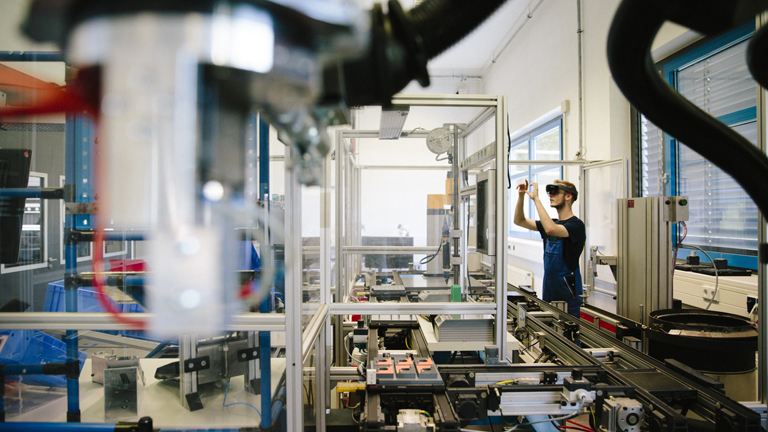
Today’s industrial workers are able to see and do things that would have been impossible just a decade ago. Augmented reality (AR), an innovative digital technology, is both enhancing what people
SME and AMT – The Association For Manufacturing Technology, will take their co-sponsored Smart Manufacturing Experience event, bringing the future of manufacturing to Pittsburgh in 2020.